
A Conversation with Ryosuke Kiyasu
An interview with Ryosuke Kiyasu on improvisation, limitation, and creating a musical narrative from a single snare drum.

Over the past decade, millions of people have encountered Ryosuke Kiyasu through short clips across social media of him playing a lone snare drum placed atop the table. People have been regaled and shocked by scenes of him lifting the table, sprawling across the floor, and striking every surface within reach. Devoid of context, those videos often become jokes or memes, inviting viewers to focus on the spectacle rather than the music.
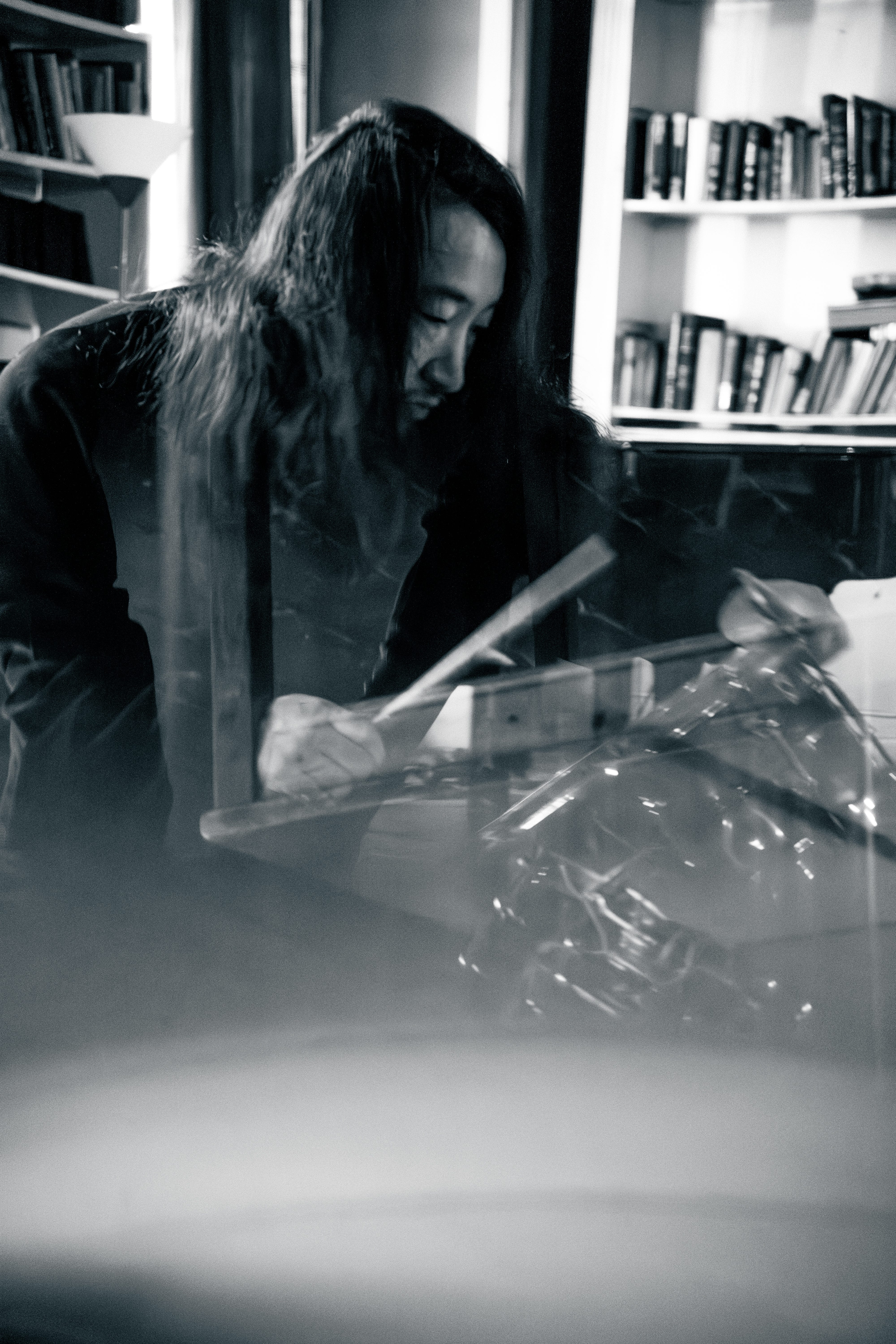
But spending time with Kiyasu and listening to his performance, it became apparent that what many perceive as spectacle was part of a musical exploration that he has undertaken for the past two decades. As he put it during our conversation:
“With a single snare drum, there’s just bam, bam, bam, bam, da-da-da-da-da, that’s it. But how to create a story about just one single instrument, to control the detail of the sound and tone. To think about every single tone. That’s very difficult.”
Every concert that he gives, every moment he spends practicing, are all in service of tackling this question of how to build a narrative from a single instrument. Through his explorations of the snare drum, he continually searches for new sounds and new ways of shaping a musical narrative from an instrument most people would think of as only one part of a drum kit.
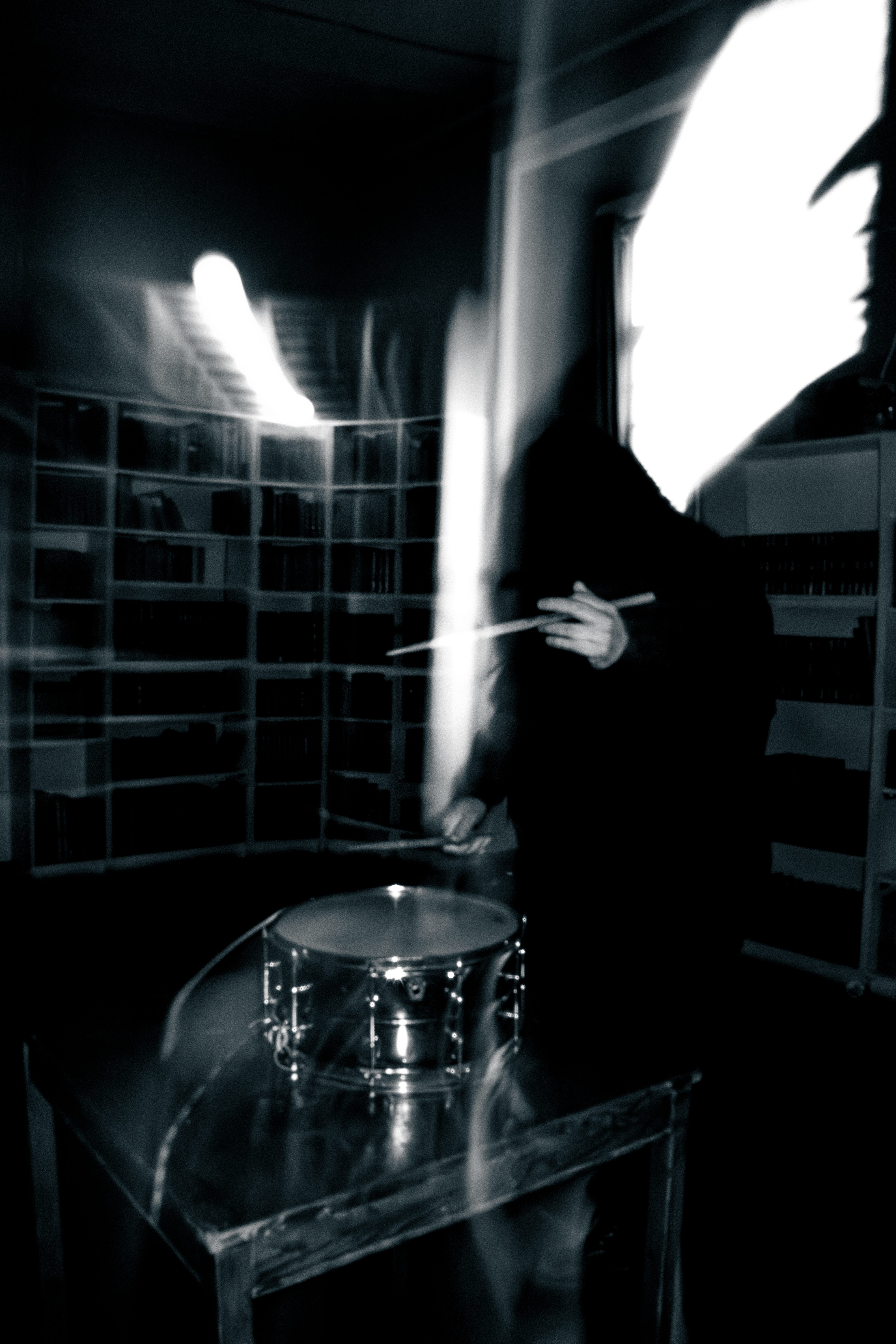
Watching him perform in person, it became clear that the boundaries of the snare drum extended well beyond the instrument. The table, the floor, his own body and the surrounding space all became extensions of the instrument. What unfolded was a ninety-minute narrative monodrama of continuous musical performance in pursuit of a sonic ideal. The longer he played, the more the world of the snare drum revealed itself.
Q: How would you describe the music that you make? What is at the core of the kind of expression you are seeking to draw out of the percussion instruments?
Kiyasu:
It’s hard to describe my music. I play snare drum in my own way. I don’t have any references for how I want to play. I play freely.
I always want to try and think about different ways to make music. And I always choose the negative or opposite of what is conventional. People will say, “I think playing this way is the best way to express the music,” but I always go with the more uncomfortable way. People feel disappointed when they watch my performance, but this is the way I want to play.
Q: How did you decide on your solo snare drum performances? Why the snare drum in particular?
Kiyasu:
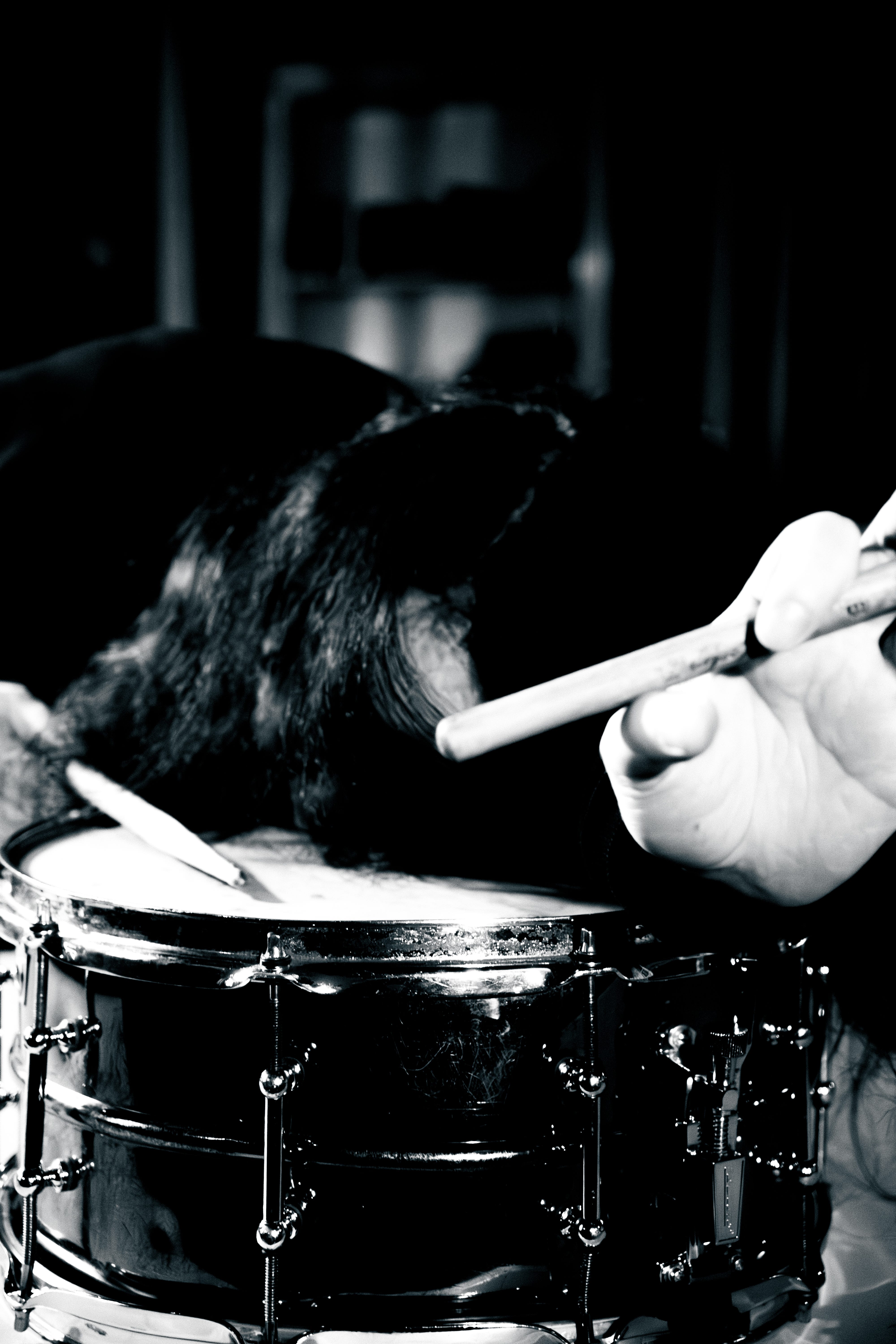
Originally, when I was 22, when I moved from Japan to Toronto, all I could fit in my suitcase was a snare drum. When I would go to bars and clubs to try and get gigs, people would keep telling me “You're a drummer, you know, if you want to perform, you have to buy a whole drum kit your own, yourself.” I didn’t have money to buy a whole set, but I did have a snare drum so I tried to play with just that. But after a while of playing the snare, I thought to myself “Damn this is difficult!”
I can play a whole drum kit solo for 30 or 40 minutes. When there’s a snare, toms, floor toms, cymbals, there’s a lot to play with. There’s a lot of material. But with the snare drum it’s difficult to play for that long without people getting bored. So I decided to practice everyday and work at it. I'm not interested in playing any other percussion instruments. I'm just dedicated to the snare drum. I'm always trying to understand this guy more.
Q: Does the limitation of just a snare drum allow you to explore sound in a way a band wouldn’t?
Kiyasu:
Yeah. I’m always trying to explore sound, and explore different ways to play. With a single snare drum, there’s just bam, bam, bam, bam, da-da-da-da-da, that’s it. But how to create a story about just one single instrument, to control the detail of the sound and tone. To think about every single tone. That’s very difficult.
People tend to misunderstand why I move around so much during my performances. This is my way of trying to produce different sounds. It’s not just for performance sake. Sometimes I might shake the snare drum, or spank it to get a more extreme sound. When I strike the instrument in a certain way, sometimes people wake up and think “Wow what was that? How did you get that sound?” I’m always thinking about ways to surprise people.
The visual element is important because people are watching as much as they're listening. That's why I record every show. The visual and the sound are one set. That's the whole work.
Q: What were some of your earliest influences not just in music, but also in sound or performance more broadly, that shaped your approach to drumming?
Kiyasu:
Growing up in the countryside there wasn’t much entertainment or much to do. I had a piano at home. So I was just playing and singing everyday. It was the only way to enjoy it.
When I was in high school, I played drums in a band for three years. Stuff like Metallica. American and Australian pop. A lot of music like that. I had been interested in more freely improvised music, you know like experimental music. Playing drums was always about keeping time, like playing to a click but I wanted to escape from this.
I started listening to guys like John Zorn and Milford Graves and after I moved to Toronto I was able to go to New York to see Milford live, and a lot of other experimental shows. And honestly, for the first three years, I didn’t understand it at all. It’s not possible to perfectly understand experimental music because it’s art. But it made me realize that music is free, it has to be free. That’s how I wanted to perform my music.
For the past few years though, I hardly listen to music at all. I stopped because I wanted to shut down my ear and think only about my own music.
Q: How have the responses to your music differed between audiences in Japan and outside of Japan?
Kiyasu:
In Japan people don’t understand it. They think about it and try to get it but there’s not much of a reaction from them during the performance. They just clap at the end and that’s it. But outside of Japan, a lot of people have honest reactions after the performance. People come up to me and say things like “Your performance was great” or “Your performance was really bad!” Regardless, it’s a reaction.
Q: Does the lack of reaction in Japan actually affect the way that you are trying to do your music? Are you trying to provoke the Japanese audience into just saying something like, “I like this”, “I hate this”?
Kiyasu:
Yeah. Break these rules you have for yourself. I think most Japanese people are trying to be nice. Honestly even for me though, it’s hard to express myself and talk about my performances. For me I just want to play the snare drum every day. I don’t want to have ideas about it. I just want to play. That’s why I travel all over the world to play in front of people.
Q: Are there any countries whose reactions you remember the most?
Kiyasu:
In Switzerland some people were crying after the show. In South America, where I toured for the last two weeks, people were dancing after the show and cheering. In Eastern Europe, I feel like my show made people sad. I don’t know why! But in Japan, after people leave the venue, they’re lighting up the internet talking about my performance. People react on the internet in Japan and East Asia in general. But in South America and Europe, I think people just enjoy the music more. They have a more natural reaction.
And I don’t mind negative reactions. Even people will tell me “You suck” but I don’t mind it. When I first started out with the snare drum, for the first five years, everybody hated me. I think I played a show, where the whole audience were telling me things like “You are not a musician!”, “You should quit doing drugs!” that I needed to play normally. I even got this from people running the venues. People even threw a glass at me during a show in America. This was standard for those first five years. Then, after the BBC News featured me in 2018, people started inviting me to come play at their venues. Now, I’m a little bit famous, but I’ve just been doing the same thing the whole time! That’s weird isn’t it?
Q: Do you think it might have to do with the change of generations as well? I think younger people today, would respond better than people from 20 years ago.
Yeah. Yeah. A lot of young people come to my shows because people saw me on TikTok. I think that this has been good for me. If the next generations are the ones to like my music, I think this is a good sign.
I used to play shows that had just five people. Sometimes nobody would show up. This is why I started playing on the street busking. Sometimes I would even pay money for open mic shows in New York City. For $40, they’d give you fifteen minutes to perform whatever you want. And I was like “Yes this is my fifteen minutes!” I didn’t give up. I just played everyday, even if it meant playing on the street.
But now it’s okay. It’s getting better. It’s why I’m very happy now. It’s kind of a dream come true. My dream was to play a show every night and now I pretty much play a show every night! I just want to keep doing this until I die.
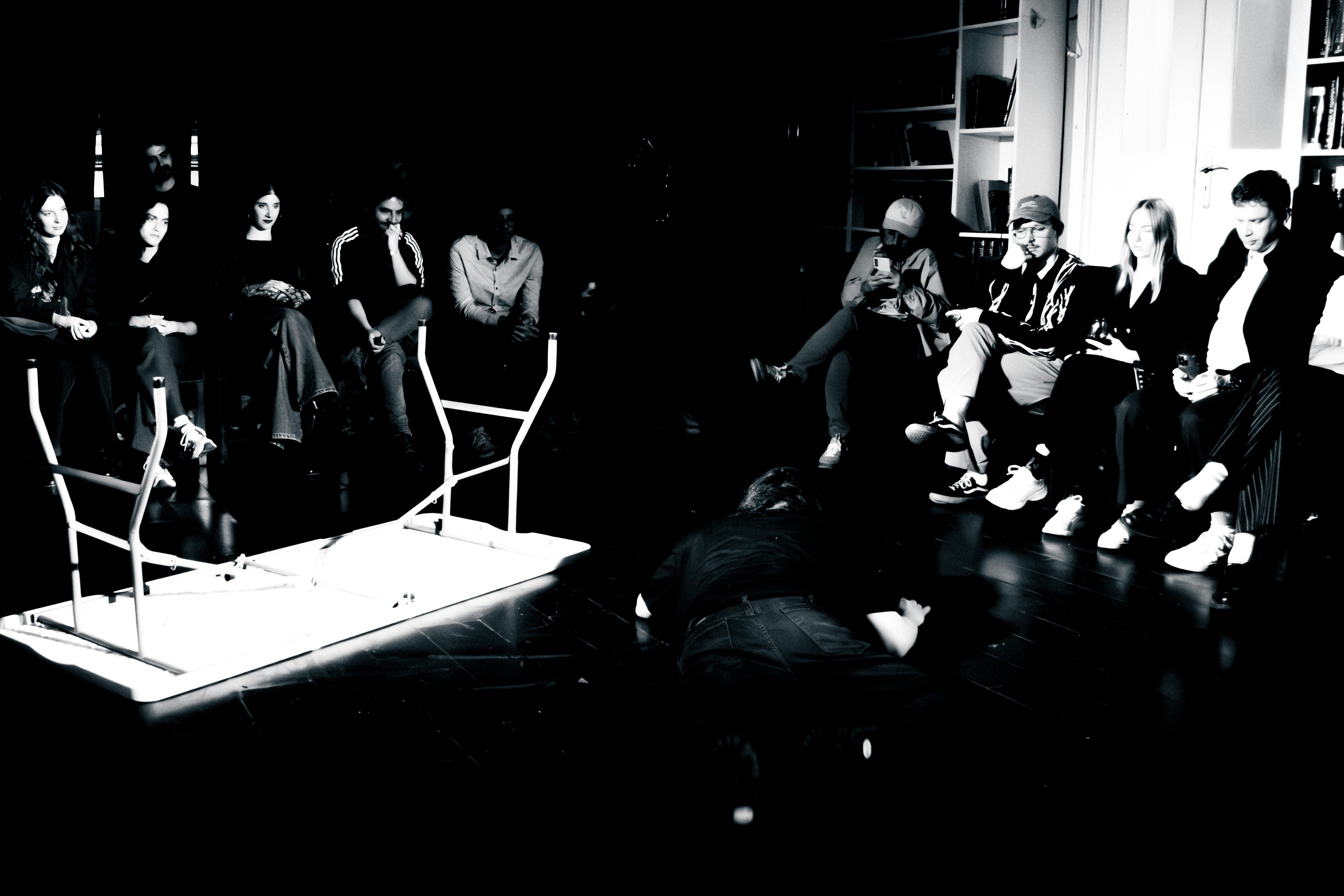
Photography Credit: Dolores