
A Conversation with Thurgood Bartholomew
The Louisville rapper discusses his 30 year career, fatherhood, and his refusal to hang it up

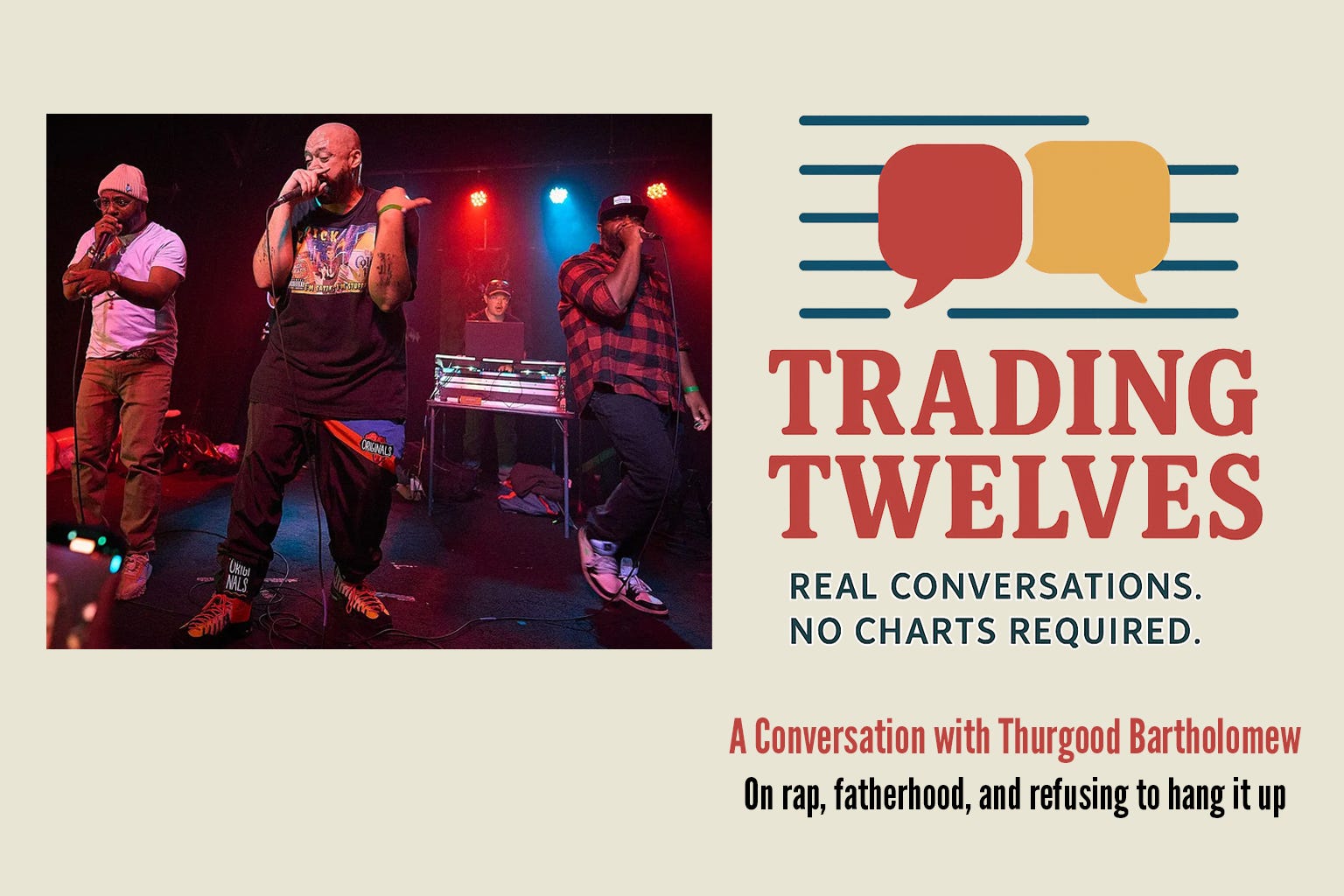
Daniel John Guess Jr., who performs under the rap moniker Thurgood Bartholomew, has been a consistent presence in Louisville’s hip-hop scene for three decades. He describes Louisville as having “an insane amount of talent,” crediting his collaborations and friendships across the scene with helping shape his artistic path.
He first made his name in Louisville’s underground rap circuit as part of the group Skyscraper Stereo, a group formed alongside Jawon "Chuck Deuce" Dunn, Landry "Dat Boi Dunn" Dunn, and Andrew “DJ AK” Kim, that emerged from the city’s open mic scene before expanding into the nightlife-dense neighborhood of The Highlands, where they performed in venues along Bardstown Road and Baxter Avenue not typically associated with rap.
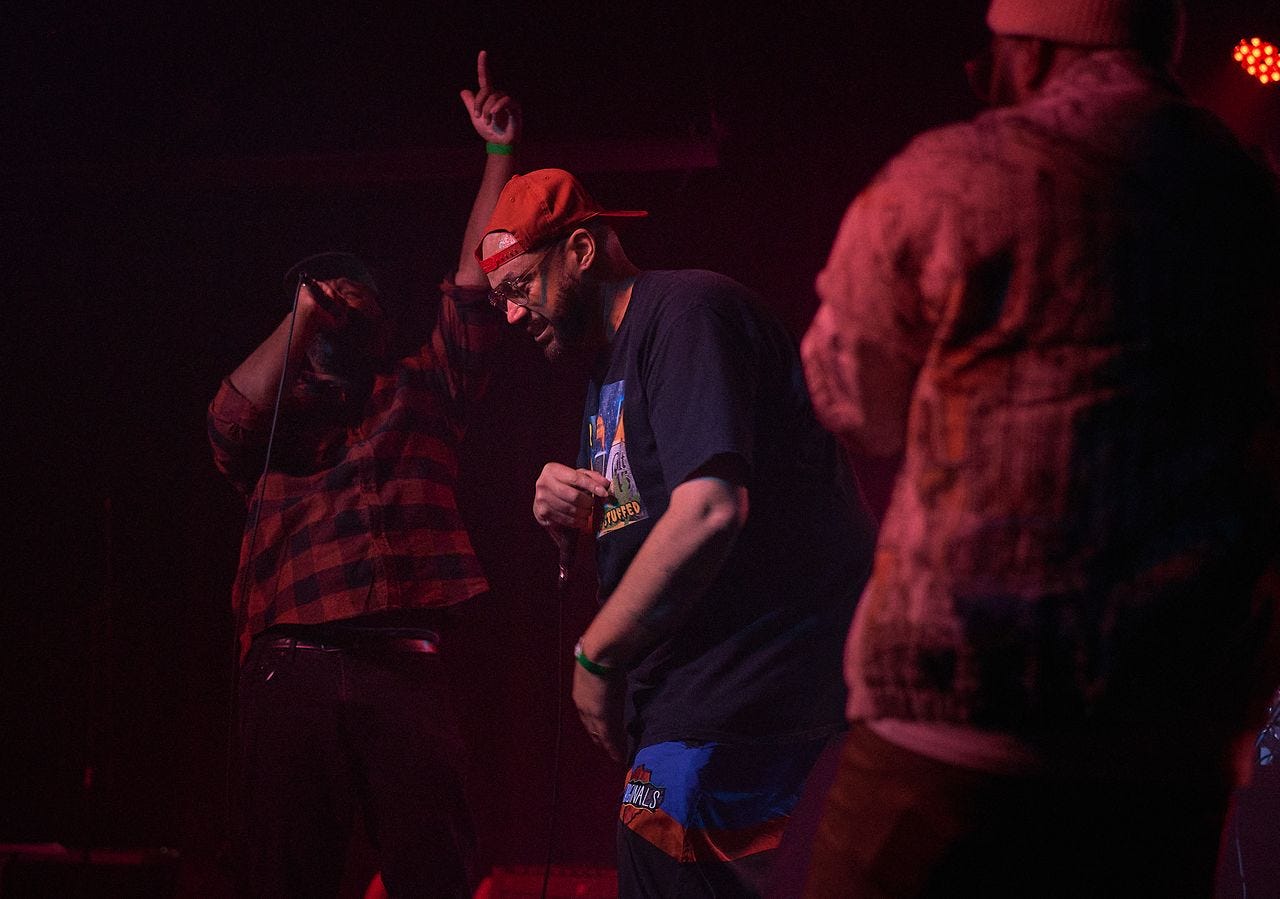
I had the chance to sit down with him and discuss how he has navigated the age-old challenge of what it means for art to grow alongside the artist. Now as a father, he has had to balance his creative work with the responsibilities of parenthood, while contending with the ways music-making, the industry, and listener tastes have evolved over the course of his career.
Q: You’ve been making rap music since the mid-2000s, through several different stages of your life. When you look back now, what’s stayed consistent and what has changed in the music you make and what motivates you to make it?
Daniel:
I think when it comes to me, I’ve always focused on multi-syllable flows and cadences. I’m not naturally a storyteller and that’s something I’ve been cognizant of as I’ve gotten older.
When I’m at my best, my style is more braggadocio and I’m really just talking shit. But I feel like I’ve been doing this for so long that I don’t want it to become too commonplace in my music. Being a father has also made me want to create things that have more meaning to them. I still enjoy braggadocio rap, but I don’t want that to be the only thing I do.
Lately, I’ve been trying to be a little more daring. I’ve got a song on this EP I just put out called “CRAzy aHh Phone”, where I’m talking about how we’re addicted to our phones and how it’s hurting relationships. I’ve got a song I recently put out where I address people that need to get off the internet, get out of their homes, and touch grass. I’m trying to touch upon some modern issues and speak on some themes that people can relate to.
Despite this, a big part my music, has been about having fun. Skyscraper Stereo was always fun. We were basically like the Black Beastie Boys, you know? House party music. But I understand that there are real issues that need to be touched upon. And I try to make sure I have a nice balance and do a little bit of everything.
Q: Hip-hop is often framed as a young person’s game. What has it meant for you to continue making music as you’ve gotten older?
Daniel:
It’s a complicated relationship. There are a lot of young artists locally that I really am a big fan of like That’s Crazy Camp, Horace Gaither and crew, they’re amazing. There’s this dude named Stxdy that’s been really killing it in the game. When I look at those younger artists and I see their approach, it makes me want to keep my approach fresh. I always want to try to make sure I stay relevant.
There was a period where I seriously considered retiring. Listening to a lot of popular rap on the radio, around COVID, made me question what I was doing. A lot of older rappers talk down on younger rappers, but I didn’t want to be that guy. Everyone has their own approach. Everyone comes from different generations and are speaking their truth. So, I’ve tried to be a little more open minded with some of the younger artists that I may not gravitate to toward like off the bat. I want to just make sure that I’m not the bitter old rapper that just doesn’t like the youngins because they’re doing it different than the way that I’ve always done it.
I work part time for Live Nation, doing security at the Louisville Palace and the Mercury Ballroom, so I’ve had the opportunity to witness so many artists and genres that I would never have chosen to see. It has really broadened my horizons. Seeing their stage presence, I could understand their appeal and it reminded me that there’s so much more to it than just the music.
It reminded me of my shows with Skyscraper Stereo. I feel like our crew was a big part of establishing the scene. There were others that contributed before us and there will be many more in the future. But I’m always reminded that being part of this scene is really all it’s ever been about for me. My individual achievements have never really been as important to me as to whether the scene itself is thriving.
Q: How have your ideas of what it looks like to be a successful artist evolved? How do you currently define success?
Daniel:
Success as an artist, for a lot of people, used to mean getting a deal and making a hit record. Today it has evolved more toward social media. I feel like a lot of people define success now by how many followers you have, how many Spotify plays you have and things of that nature. But I don’t define my personal success by those. My success is more defined by my longevity on the scene.
Skyscraper Stereo just had a reunion show last night and there were so many people telling me things like, “I’ve been listening to you for so long!”, “I can’t believe I’m doing a show with you.” Last night, this guy, Corey, told me, “Man, I’ve been wanting to do a show with y’all since I was like 16. I’m like 30 and now we get to open before y’all.”
At the reunion show connected to the late Brian Puckett and Little Heart Records, Jawon brought up something that really resonated with me. He said, “We may not be driving Porsches and things like that. We may not be, quote unquote, successful artists. But right now, I’m in a room where we get to perform in front of everybody in the city that I respect as an artist. And that’s priceless to me.”
It’s those kinds of things. Monetarily, I haven’t gotten anywhere I would like to get with my career. But I don’t let that stop me from what it is that I’m doing.
I’m not sure where my motivation comes from, but lately, I’ve been very inspired. And I’m just not questioning it. I just I’m just running with it.
I’ve been writing at a crazy pace here lately, writing three or four songs a week, which is unheard of for me. Maybe I’m just worried that I’m going to lose it at some point because I’m getting older and I’m just trying to get it all I can. But for whatever reason, I’ve been really inspired.
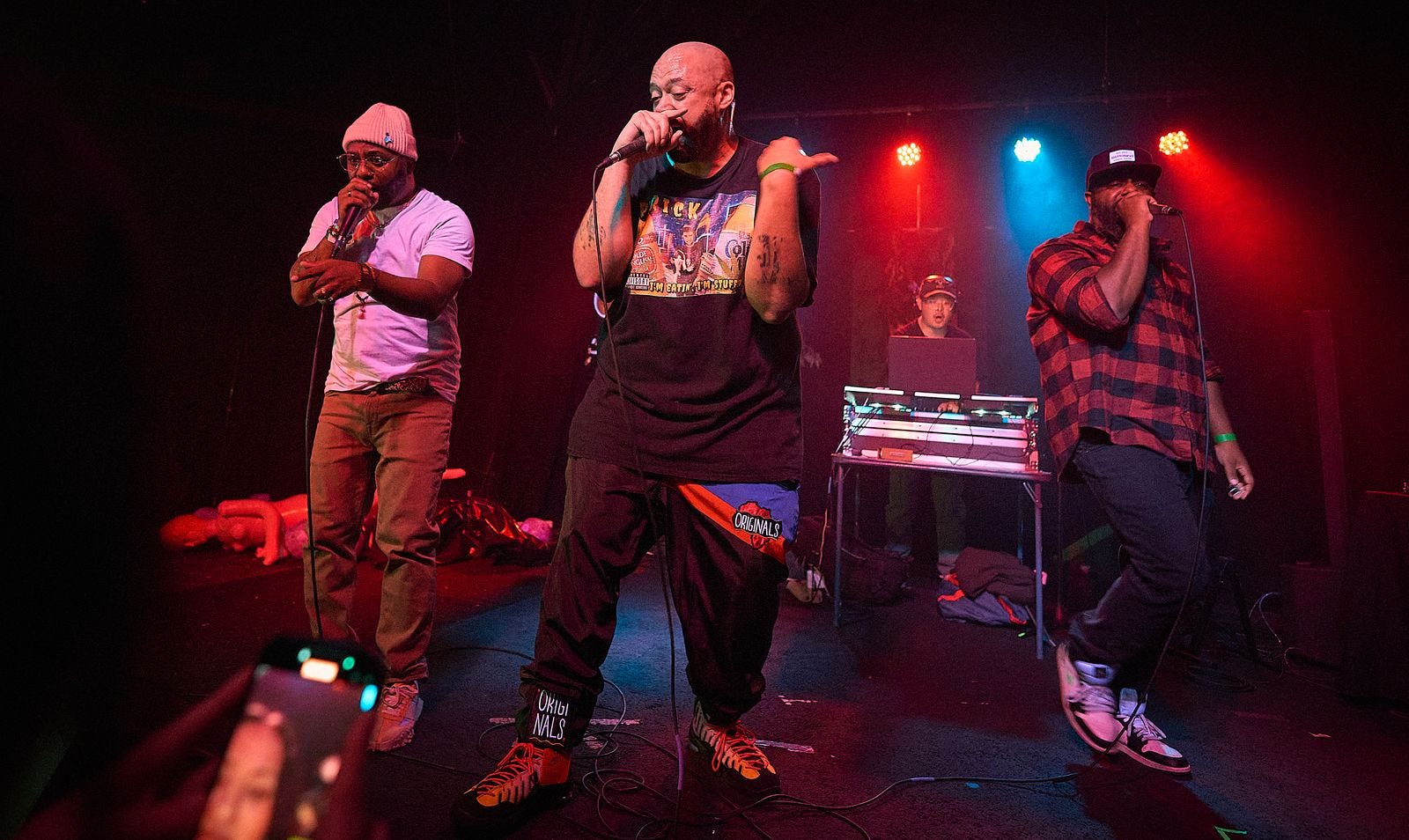
How did becoming a father change your relationship to creativity and making music?
Daniel:
It has definitely made creating music less important. I guess rap was kind of my baby for a while. I put so much into it. But to be a present father, I have had to do a lot less of that. I am writing a lot more, but I tend to do that, when they’re asleep.
Sometimes I’ll play my instrumentals around them, and they’ll really love the music that I’m working on. I don’t really let them listen to a lot of my stuff because there’s a lot of language that I don’t really want them to hear.
They’re both pretty musical, too. My daughter just wrote a song about a bee that wanted to be a fairy. And it was really pretty and melodic. And she wrote the whole thing from scratch. I asked her, “You didn’t use a melody from some other song to come up with that?” She’s said, “No, I just made it up from my head.” I guess they just naturally have that talent, too. My son just graduated kindergarten, and he wanted to make a song about that. I think it’d be awesome to keep working with them throughout the years.
Right now, I’m navigating a space to where I can get them more into that type of thing where I can kind of cater to them and let them in on my process without corrupting them. I’m not able to do it as much because of them, but I wouldn’t trade that for anything. I’m crazy about those kids. It’s nice to see that they have that same kind of creative bug and watch that blossom.
Q: When you when you first started on the Louisville scene, what was the scene like when you compared to how it is today? And did things shift once more artists from Louisville started gaining more national attention?
Daniel:
When I first started on the scene, it was a time where there wasn’t much love between crews. There were a lot of a lot of egos. We had a couple of beefs for no reason. Like we had beef over like our name because we had the same name as another group. It was it was a lot more divided.
We were one of the only groups that were part of the open mic circuit that weren’t like hood. Like they were snapping and dancing and shit and we weren’t on that. We had to earn their respect. But eventually we were all brothers, and it was a lot of love.
But I feel like even around that time there was already a shift as far as support for other artists. As we became part of the growing Bardstown Road scene, we saw more artists coming together and supporting one another. And we all did a lot of shows together. Grimey Rhyme Regime was killing it. We did a lot of shows with them. And we did a lot of cross genre stuff, too, especially when we were part of Little Heart Records.
We played Forecastle Festival with Dr. Dundiff and that was crazy. Dr. Dundiff had so many super talented artists and he put them all in one crew. We had people like Jim James from My Morning Jacket come and do the set with us. Dr. Dundiff, had the stage and he could have been like, “OK, I’m playing Forecastle, I’m a rip Forecastle by myself.” But he didn’t do that. He said, “I’m getting so many dope artists from the city to put on a whole showcase to show what they can do.”
People are doing things like that now. The city is coming together, and everybody keeps the egos at home. You know, there’s a dude goes by Coach Cam, a younger guy. I recently went to see a show with him and a bunch of artists that he’s working with. I feel like they’re keeping that momentum going where you get these big crews of talented people and they all get together and rip shit and there’s no ego.
With the success of people like Jack Harlow, Bryson Tiller and EST Gee, I don’t feel like there’s been much of a shift in the scene with them getting the national attention that they’ve gotten. There’s a lot of talent locally that doesn’t get the same kind of recognition that they have. But seeing artists from Louisville reach that level has inspired a lot of younger artists. If you see so many artists from your area that are doing it big like that, it puts a battery pack in you and makes you think, “Hey, I can do this, too.”
But someone else might tell you they feel differently. I’ve been around long enough to see it shift both ways, but right now it feels like artists are genuinely supporting one another. Social media kind of skews perspectives a little bit. Maybe some people are sitting on their keyboard and feel like that’s not how things are happening. But if you’re out at the shows and you’re rubbing elbows, talking to people, then you understand that there is a camaraderie about what’s happening right now in our scene.
Listening to your recent projects F.R.F.R. and Paper, there’s a sense of renewal and creative momentum to them. Did making those projects feel like a new artistic chapter for you?
Daniel:
Yeah, definitely. F.R.F.R. felt like a resurgence for me because I was pretty much ready to hang it up. Then I got this pack of beats from L Double U who produced the whole thing. He awakened something in me that had been dormant. Even though I was talking about quitting, I don’t think I really wanted to. There was something about those beats that put the love back into it for me.
And then around the time I was recording F.R.F.R. I met J-Ideas and I did a song with him. And I mean, his production is insane. And he’s such a good dude. He’s an amazing videographer, too. He produced the “Type Shit” and shot the music video. He produced all of the Paper EP and is to produce pretty much all of the next two EPs Rock and Scissors.
Meeting with him and having sessions with him has been a big part of what all the recent momentum that I’ve had and how much I’ve been inspired. His production really brings it out of me. If I’m just chilling and I hear one of his beats, I start writing without even thinking about it. I think that’s really keeping me motivated, just keeping me keeping me driven and excited about, putting out as much material as I can.
There’s also a need to be strategic about what comes out when. That element has changed so much. I feel like people aren’t really concerned about promoting full albums and things like that. I don’t know if we’ve got the attention span for it anymore.
I’m used to doing like three sixteen bar verses and eight bar hooks. Now it’s like people want like two eight bar verses and like four bar hooks. Songs are like a minute long. I’m trying to adapt to that. But I think because of it, I’m putting out that many more songs since I can’t get everything I want to say out in one song.
You’ve released music under different monikers such as Mr. Goodbar and Thurgood Bartholomew. Do those different names represent different artistic phases or sides of yourself?
Daniel:
I first started off as Uneducated Guess and then that evolved into Never Second Guess, which is kind of wordplay. I’m a junior, so I am a second Guess. It’s kind of an ironic name.
But then I turned into Mr. Goodbar, then Goodbar, then that evolved into Thurgood Bartholomew. I’ve got a million aliases as well. Goody Two Shoes, Peppermint Patrick, Big Brother All White Tee.
I think after Skyscraper Stereo broke up, when I decided I wanted to do some more solo work, I felt like I needed to reinvent myself some kind of way. I came to realize that there’s so many rappers using the name Goodbar. When I first came out with it, I didn’t see that many of them. But now if I go to Spotify and search for myself there’s so many other Goodbars. There’s even one dude out of the Bay Area named Mr. Goodbar seems like he has a pretty good following.
I mean, I love it. People still call me that, but I needed something to make me stand out.
The funny thing about Thurgood Bartholomew was that it’s the long version of Goodbar. So it’s Thur-Goodbar-tholomew. It keeps the root of who I am, but it adds a little bit to it. It kind of sounds nerdy and I feel like I’m kind of a nerd rapper.
Honestly, though, I’m not real crazy about Thurgood Bartholomew because it’s so long and it’s hard to spell. If I meet somebody that wants to follow me on Instagram, I have to write it down or send it.
I recently flirted with Kyngpin, like the king of Kentucky (KY) with the pen. That’s kind of a cool name, but I just dropped a project under Thurgood Bartholomew. If I drop the next under Kyngpin, people aren’t going to know how to find me.
We collaborated on the song “Metamorphosis” during an earlier creative period for both of us. Looking back on it now, do you see connections between who you were artistically then and the music you’re making today?
Honestly, that project inspired me because it forced me to touch on some real subject matter and not just talk a bunch of shit. I think collaborations like that have helped me broaden my horizons and not be so one-sided. At the end of the day, versatility is what’s really important to me as an artist. I want to be able to work with anybody and adapt to whatever style or genre the music calls for. I’m pretty eclectic myself. Maybe not country music, though! I know it’s popular for rappers to dabble in country right now, but I can’t stand that shit!
What is your advice for young artists?
Daniel:
Just stay the course if it’s something you’re passionate about. Don’t let anything rattle you. There’s going to be ups and downs. You’re going to hit walls from time to time. You’re going to have writer’s blocks. You’ll have different seasons in your life. Things will happen that may discourage you.
But just put it all on the pen, man. Whatever you’re going through, something’s bothering you, take that time to write about it even if you don’t put it out. Use your art to help you get weather that storm. If it’s something you’re really passionate about, just don’t let anything steer you in a different direction. Stick with it.
Here I am now, it’s been 30 years since I started rapping. I just feel like I’ve gotten better with time. It’s not a young man’s game, contrary to popular belief. If you love this, and you have a passion for it, just create. Do it for the love and don’t expect any money out of it either. That’s my biggest advice! At the end of the day, I don’t think how much money I’ve made is going to define who I am as an artist. And most importantly, stay humble.