
Remembering Phil Schaap
A reflection on the late great Phil Schaap. Every year on my birthday, Phil would give me a shoutout on his radio show. This year, I wanted to return the favor.

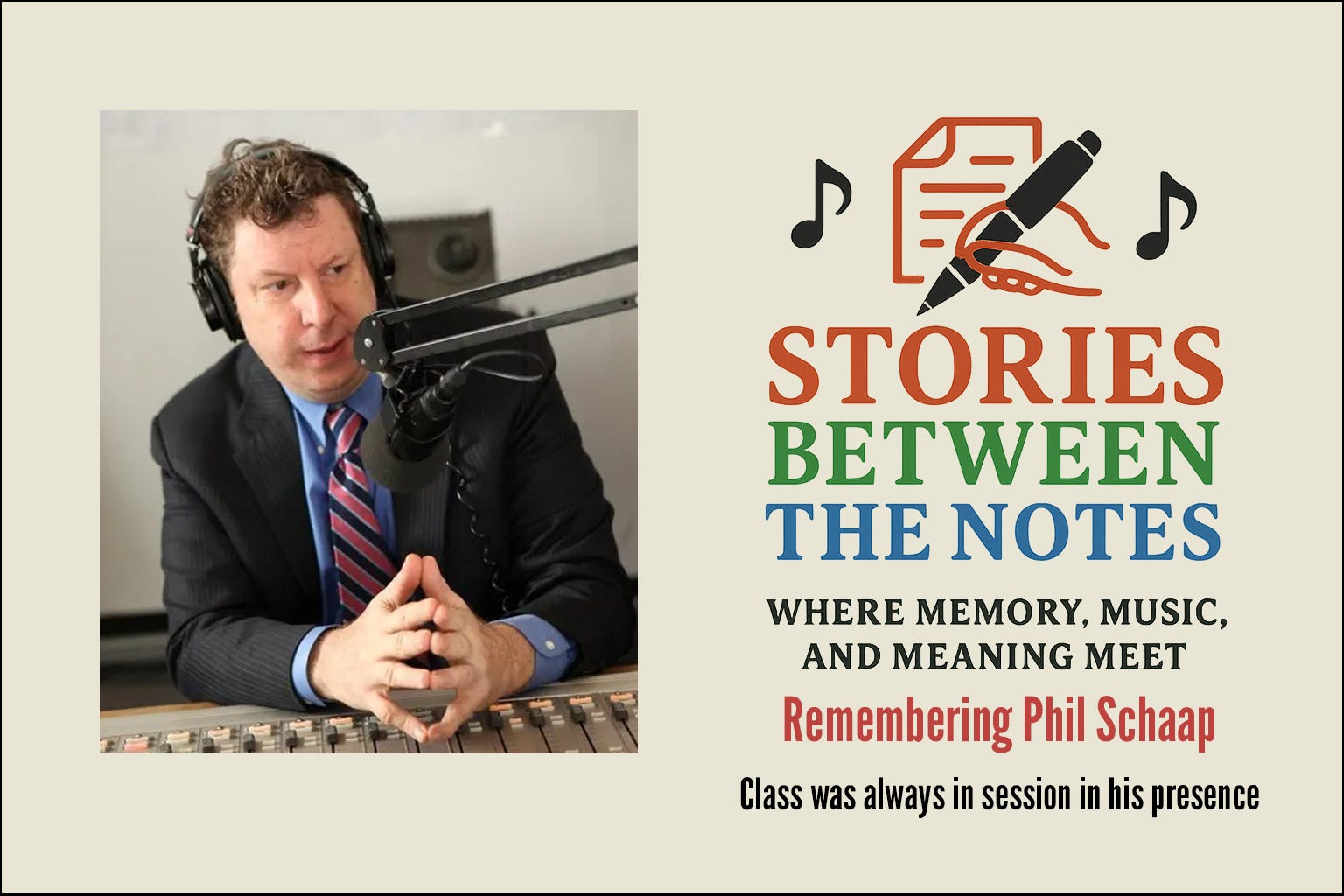
There’s this funny thing that I experience occasionally, when I am researching in the realm of jazz. As I’m reading an article or essay, tucked between quotations and citations, I would frequently come across the name of the late historian, record producer, jazz archivist, radio DJ and collector of stories and tales short and tall, Phil Schaap. Whenever I read quotes or citations of his research, I can just imagine him in his animated way of storytelling, conveying knowledge well beyond the quote at hand. I’m immediately brought back to the days of my childhood. When spending time with my father at Jazz at Lincoln Center, either coming in to work with him, or attending concerts at Dizzy’s Club Coca-Cola, Phil Schaap would be among the frequent faces I would encounter.
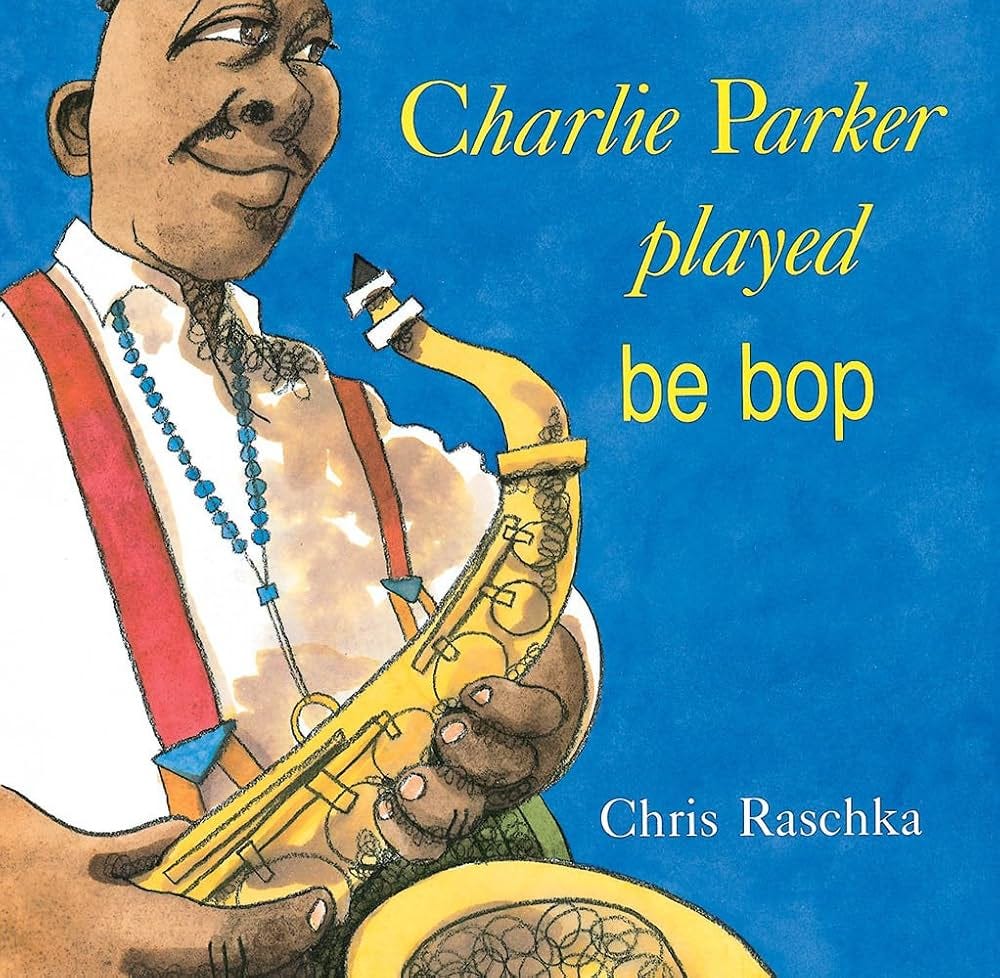
I was always fascinated with him and his ability to recall the most minute of details and obscure anecdotes. But as a child I was completely unaware of the fact that I first encountered his name in one of my favorite childhood books Charlie Parker Played Bebop. That book was among the first that I “learned” to read (more likely that I memorized it after the many times my mom and big sister Kenithia would read it to me) and little did I know that the man who that book was dedicated to would in a few years be one of the people at Jazz at Lincoln Center who I greatly admired.
It seemed like there wasn’t a topic Phil didn’t know something about. I would spend hours as a child picking his brain about anything that came to mind, and as I grew, so did the conversations. He would tell stories of his encounters with the pantheon of jazz greats throughout his career in picture perfect detail all the way down to the apartment number on their addresses. He would engage me in historical conversation about weighty topics such as World War II or the CIA assassination of Patrice Lumumba. He would also engage me in pop quizzes full of trivia, and questions designed to stump. I have a funny recollection of him stumping me with a really obscure question and pulling out the finger guns in celebration exclaiming “Boom! Gotcha!” He would never condescend or speak down to me, he always treated me as an equal that would understand all of what he said, even if I didn’t fully grasp it all.
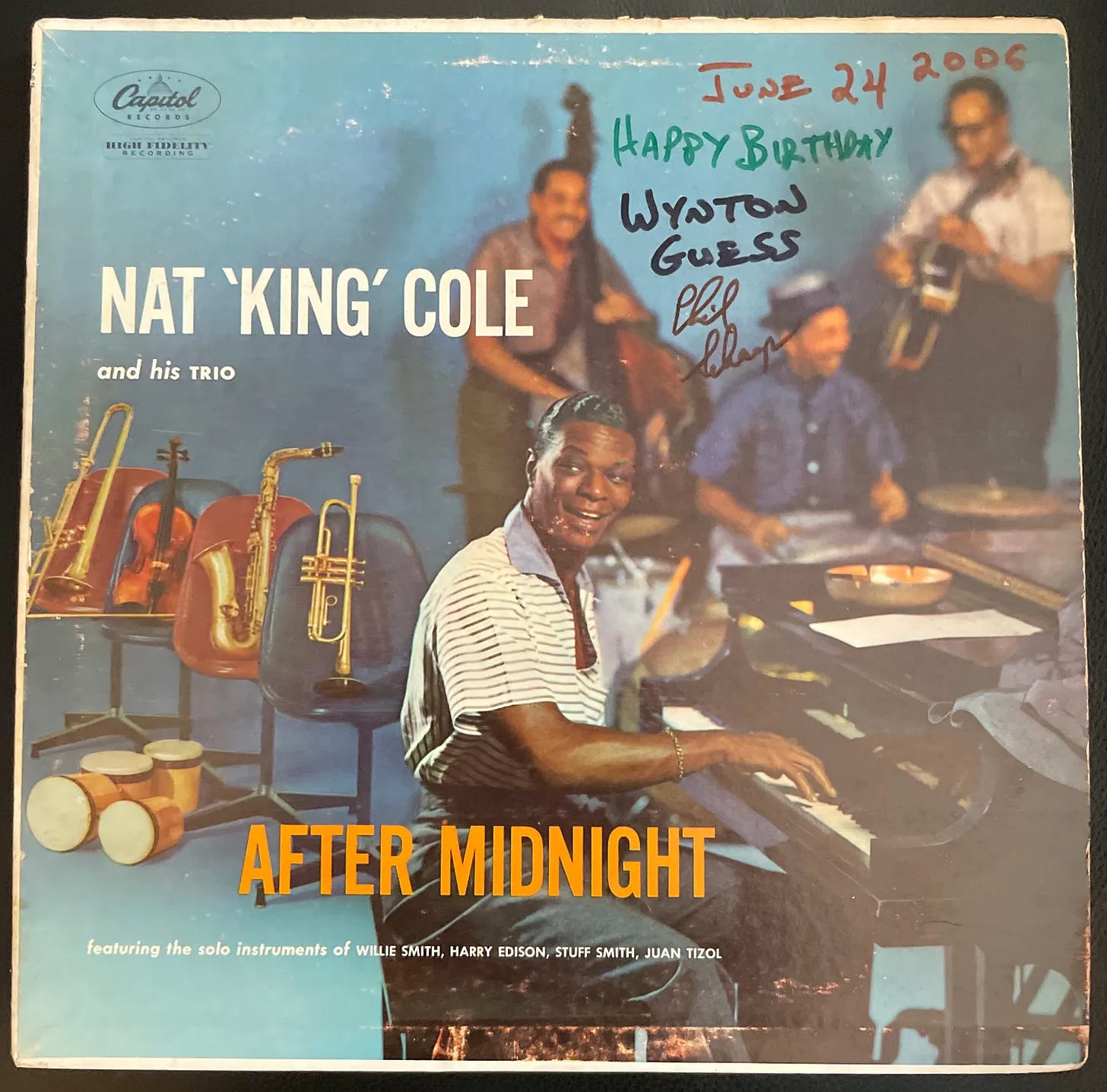
Phil would frequently greet me and my father by our names followed by our birthdays flexing his eidetic memory. “Hello Wynton Kelly Stone Guess, June 24 1993, and Andre Kimo Stone Guess July 24, 1966! Booyah!” Every year on my birthday, Phil would give me a shout out on his radio show.
Below is an on-air shoutout that he gave to my father in 2006 on his 40th birthday, where he graciously mentions me as well.
He would also send me an email as well with a witty message and personalized sign-off.
The first email I received from him in 2011 read:
Dear Not So Little Wynton,
Happy Birthday!!
No matter how old you get, I will hold a place for you in my classroom.
Yours in Wanda Landowska and Donald Lambert,
Phil
It is not lost on me, as a PhD student in contemporary history and a researcher, that I owe a great deal of gratitude to Phil for always having a moment free to indulge my curious mind, challenge my knowledge of jazz history, and give me an historical perspective on my own influences in my playing.
One such instance was his stylistic analysis of my recording of Scott Joplin’s composition “Bethena”.Without telling him the source of the recording, my dad and I simply asked him to guess the performer. In that moment, Phil began to listen intently, picking apart the quality of touch, how grace notes were shaded, and even how rhythms were accented. He was eventually led to the tentative conclusion, that this was someone a lost recording of Thelonious Monk! Though of course he knew that the recording quality was a dead giveaway that in fact was not Monk. This interaction gave me valuable insight into my playing and the pianists who were influencing me up to that point.
He’s one of the people that really shaped my outlook and made this path that I’m on possible. The older I got and the deeper I embraced my academic pursuits, I found myself accumulating the kind of “fun facts” and depth of knowledge across many different fields and disciplines, that I had once believed solely belonged to the domain of Phil Schaap. Writing my thesis, discussing music history, geopolitical history, and social history, I am often reminded of the epic and sprawling conversations I would have with him in the offices and spaces of Jazz at Lincoln Center. And with this blog Wynton Kelly’s Liner Notes I feel myself following in his footsteps. As he would regale me with stories of knowing some of the jazz greats and their peculiarities that came from knowing them personally, I now find myself doing the very same thing about Phil Schaap.
No matter how old I get, I will never forget about the classroom of life that would spontaneously materialize in his presence, nor will I forget one of the people who most encouraged and indulged my pursuit of knowledge.
Phil is smiling! Nice one Wynton!