
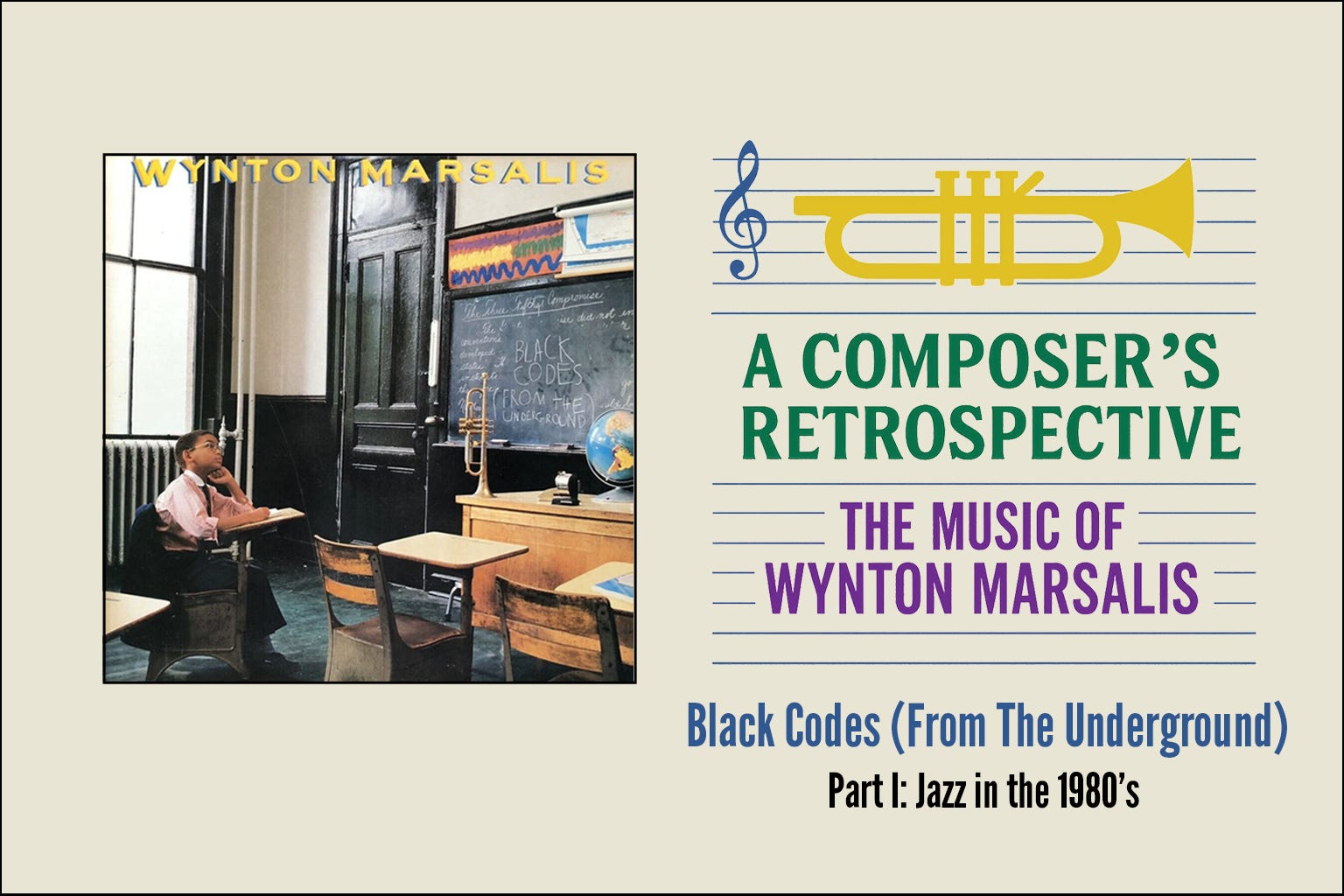
Wynton Marsalis: A Composer’s Retrospective — Black Codes (From the Underground): Part I
Black Codes and the Cultural and Musical Landscape of the 1980s

Editor’s Note
The first two articles in this series of each installment will be free to everyone. The complete series, including the exclusive unabridged interview with Wynton Marsalis, will only be available to paid subscribers.
Assembling a series like this takes months of interviews, research, and writing. If you’d like to journey with me through the entire project and support this type of in-depth music journalism, please consider signing up for a paid subscription.
The Young Lions of the 1980s
The 1980s are often an overlooked period in jazz history. Emerging from what many considered the “dark age” of the 1970s, this was a decade when a wave of young musicians began to establish themselves, though most had yet to release the recordings that would cement their status as jazz greats in later years. The ’80s were a time of transition, shaped by the unique cultural and musical atmosphere at the start of the decade. At the heart of this shift was a group of rising talents known as the “Young Lions”—musicians such as Donald Harrison, Kenny Garrett, Kevin Eubanks, Wallace Roney, and, of course, the Marsalis brothers, Branford and Wynton.
There was a lot of energy and enthusiasm surrounding these young musicians.
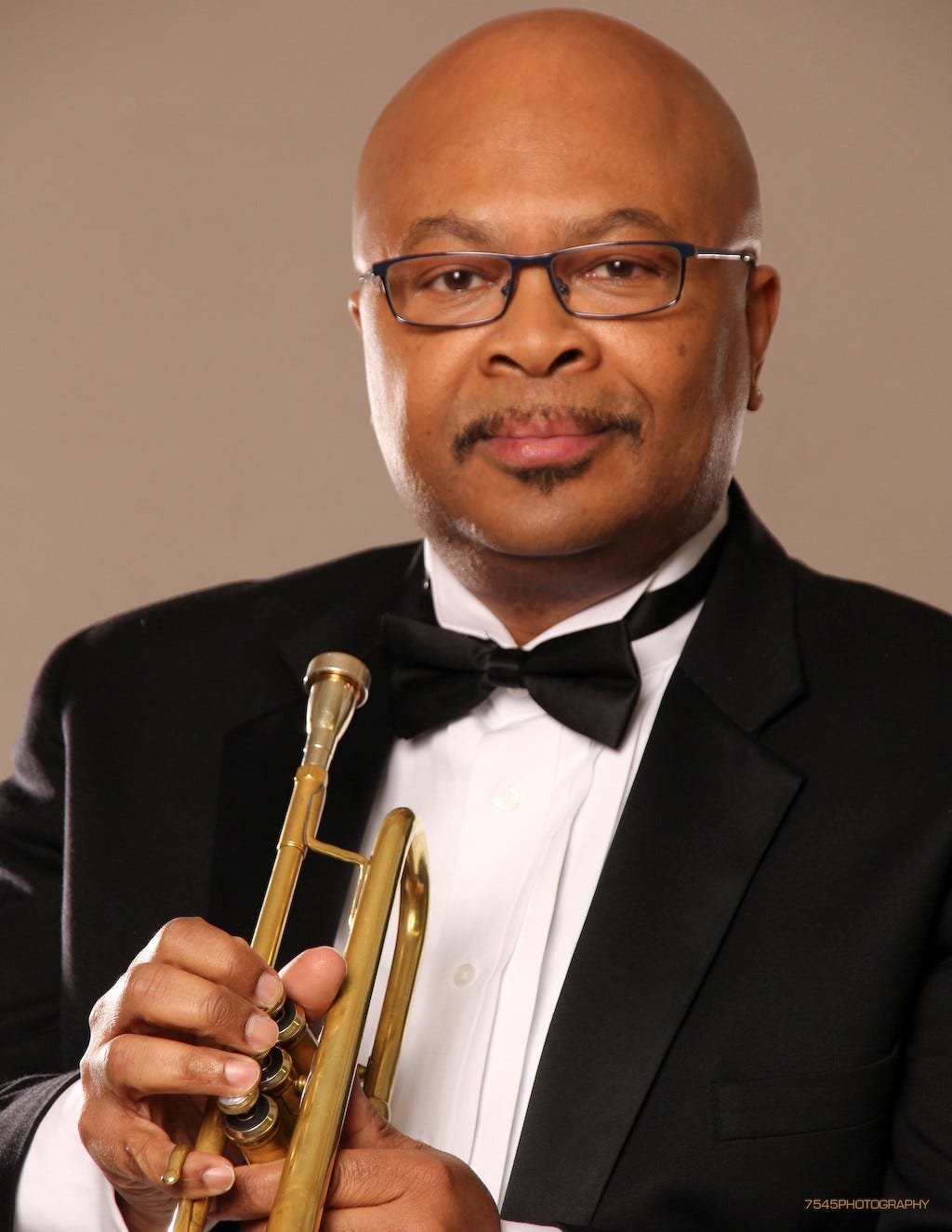
“Alongside Miles Davis coming out of his “retirement” of the 1970s, it felt like [there was] a renaissance, [like we were] on the cusp of something really great. Everything was open,” said trumpeter, educator and author Mondre Moffett. The next generation of musicians had the luxury of being surrounded by many of the seminal greats of the music. Moffet’s younger brother Charnett played bass on the Black Codes recording, at the ripe old age of 17.
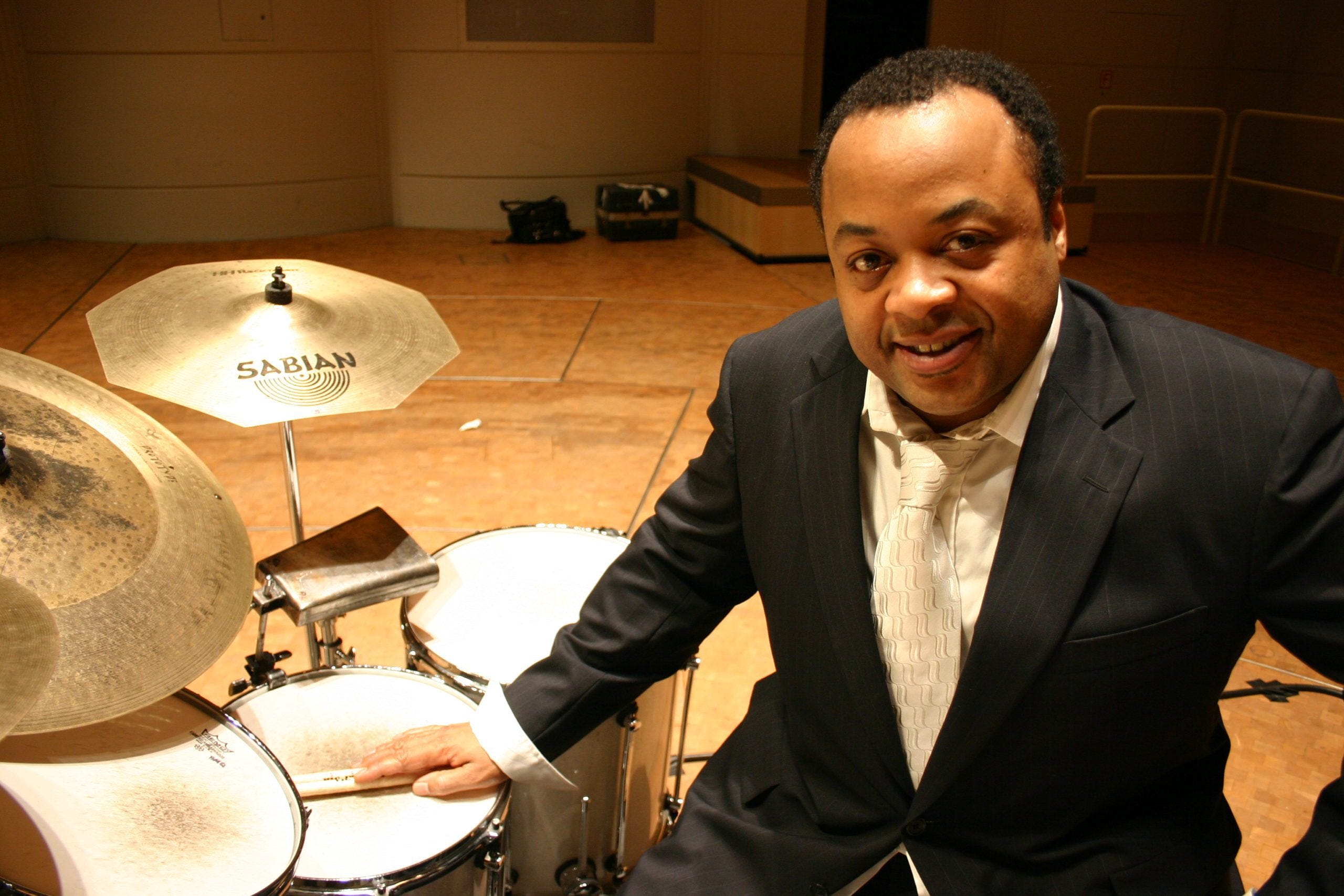
Drummer and composer Jeff “Tain” Watts, the drummer on Black Codes, recognizes the importance of being a part of this continuum. “Most of the greats, except for Bird and Coltrane, were around. So you would see Dizzy Gillespie… you could go see Ray Charles, Lionel Hampton, Sarah Vaughan and Ella Fitzgerald all in the clubs and talk to them. I think it was a really healthy time.”
Moffett saw this infusion of young new voices as just an extension of what had been happening in jazz all along. “It was a great feeling. It was centered all around young people, young players. But that really wasn’t anything new, because jazz has always been centered around the youth in that way.”
Branford Marsalis, Wynton’s older brother and saxophonist on the album, offered an important perspective on the atmosphere that allowed jazz to reemerge in the hands of younger musicians.
He noted that the success of jazz in the 1930s, 40s, and 50s was shaped in part by the racial politics of the era. Talented figures like Fletcher Henderson—who held a degree in chemistry—were often blocked from advancing in other professions due to discrimination, and so turned fully to music. But as opportunities expanded in later decades, many who might once have pursued jazz instead followed new professional paths.
“A lot of brothers and sisters became doctors and engineers, and that drained the talent pool. And then a lot of people followed the more lucrative paths of pop music, because despite the myth about popular music, the better natural players will gravitate to that direction unless they have an acute love of jazz. There’s a small percentage of people who have an acute love of anything that they do, whether it’s athletes or musicians or writers or whoever it is.”
Branford argues that by the 1980s, the landscape had shifted just enough to create what he called a “slim avenue” for young, ambitious musicians to carve out space in jazz. In his view, this was a rare window, one that simply didn’t exist a generation earlier. Looking back he realizes that if he had arrived in New York twenty years before, he would have faced the same roadblocks his father, Ellis Marsalis, encountered when he tried to break in.
“My dad goes to New York and Tommy fucking Flanagan’s there. And Wynton Kelly’s there. McCoy Tyner’s there. Dexter Gordon is there. John Coltrane is there. Coleman Hawkins was still alive. Lester Young was still alive. I could go on and on and on. Billie Holiday would have just died. Bird had just died in ‘54.”
By the time the Young Lions emerged in New York, the jazz world was still feeling the aftershocks of the 1970s. The center of gravity had shifted as major figures like Miles Davis, Wayne Shorter, and Herbie Hancock pursued fusion and commercially successful crossover projects. The critical debates of the era reflected this tension: was jazz evolving, or losing its core? What remained were the musicians who stayed committed to the tradition, even as the broader current of talent flowed toward pop and other more lucrative directions.
This led to what Moffett described, a “stalemate in the music”.
Many musicians at the time were less concerned with earlier traditions and more oriented toward the future. The emphasis was on “newness” and “innovation,” whether in the avant-garde or in the novelty of the fusion of jazz with other genres. When Branford and Wynton arrived on the scene, they carried an approach that pushed against this forward-only mindset.
“Wynton decided to move to New York and the kind of linchpin of his philosophy was that we were going to play to the future by studying the past, which is not that revolutionary in the scheme of the world.”
“Playing to the future by studying the past”
This approach of “playing to the future by studying the past” earned the Marsalis brothers notoriety within the circles of criticism in jazz. It colored how people viewed them. Many people were quick to notice the influence they took from Miles Davis’ Second Great Quintet. But for them, influences weren’t something to hide. Rather they wore them proudly. Branford recalled that he took a lot of criticism from people for his study of Wayne Shorter, instead of studying the sheer velocity of John Coltrane’s playing.
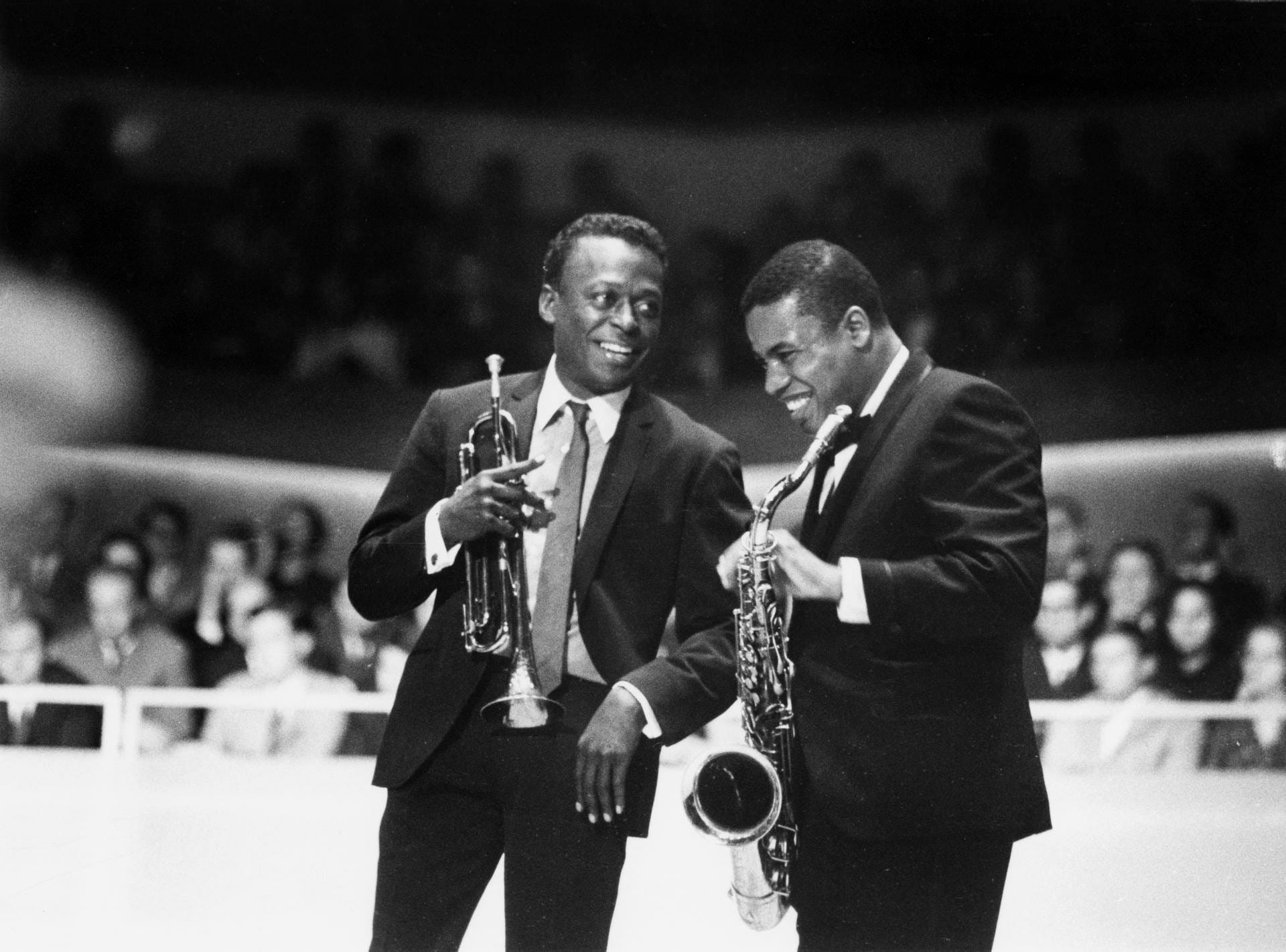
A piece of criticism that encapsulates the common criticisms levied at Wynton and Branford Marsalis is a 1982 essay by late culture critic Greg Tate entitled, Baby Miles and Baby Wayne.
In this essay, two major themes emerge that have continued to shape discourse around Wynton and Branford Marsalis.
The first is the idea that looking back to tradition is inherently reactionary. Tate characterizes the brothers’ “bop and post-bop revivalism” as “not only regenerative but reactionary.” While he acknowledges that such revivalism was “necessary,” he ultimately concludes that it was “atavistic.” In Tate’s view, the music they sought to restore—though once groundbreaking—was ultimately played out. By extension, the implication was that the Marsalis brothers’ own music was equally played out.
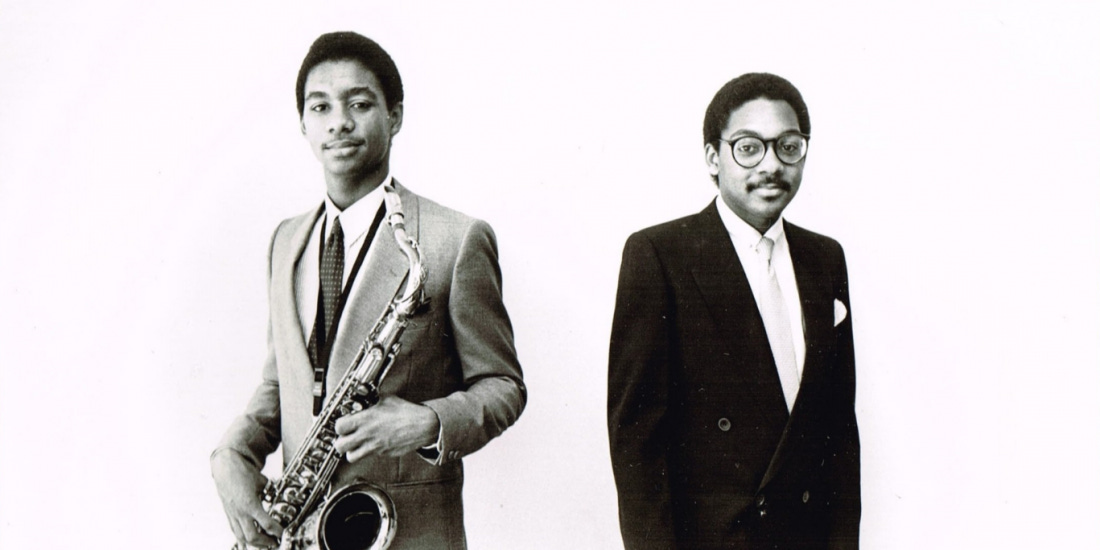
Another common criticism was the use of Branford and his style of playing as a way to tear down Wynton and his playing.
Tate also framed their individual studies of past masters in a negative light. Wynton’s deep engagement with the history of the trumpet was cast as a flaw, while Branford’s study of Wayne Shorter was praised only in a backhanded way. The positive he highlighted in Branford—that he constructs “tough musical syllogisms”—was presented as the natural benefit of studying Shorter, but ultimately used as a foil to criticize Wynton. In contrast, Tate depicted Wynton’s work as a “probing yet an overanxious grapple for identity,” setting up Branford’s supposed focus against his brother’s perceived restlessness.
By studying the history of the trumpet and having that influence come through clearly, Wynton’s approach is cast as unfocused and riddled with anxiety about identity. The inherent assumption is that Branford knew who he was while Wynton didn’t, while both are adhering to an approach to music that is regressive.
The Outspoken Wynton Marsalis and the Meaning of Black Codes
Though the Marsalis brothers were often criticized for their backward-looking approach, it was Wynton’s outspoken nature that drew the most attention, and controversy, to his name. A quick glance at the liner notes of Black Codes (From the Underground), written by the late cultural critic Stanley Crouch, makes clear why Wynton struck such a chord. Crouch explains that the album’s title refers to the “prohibitive 19th-century slave laws that emphasized depriving chattels of anything other than what was necessary to maintain their positions as talking work animals.” He then extends this metaphor of black codes into the sphere of art and jazz:
“In his mind, the pressure of commercialism is another form of Black Codes, one that reduces all willing musicians to highly paid but low-grade plantation entertainers, regardless of race or idiom. The late Roland Kirk called it “volunteer slavery.” Coming from the other side of the field, Marsalis is more interested in the statement than the payment.”
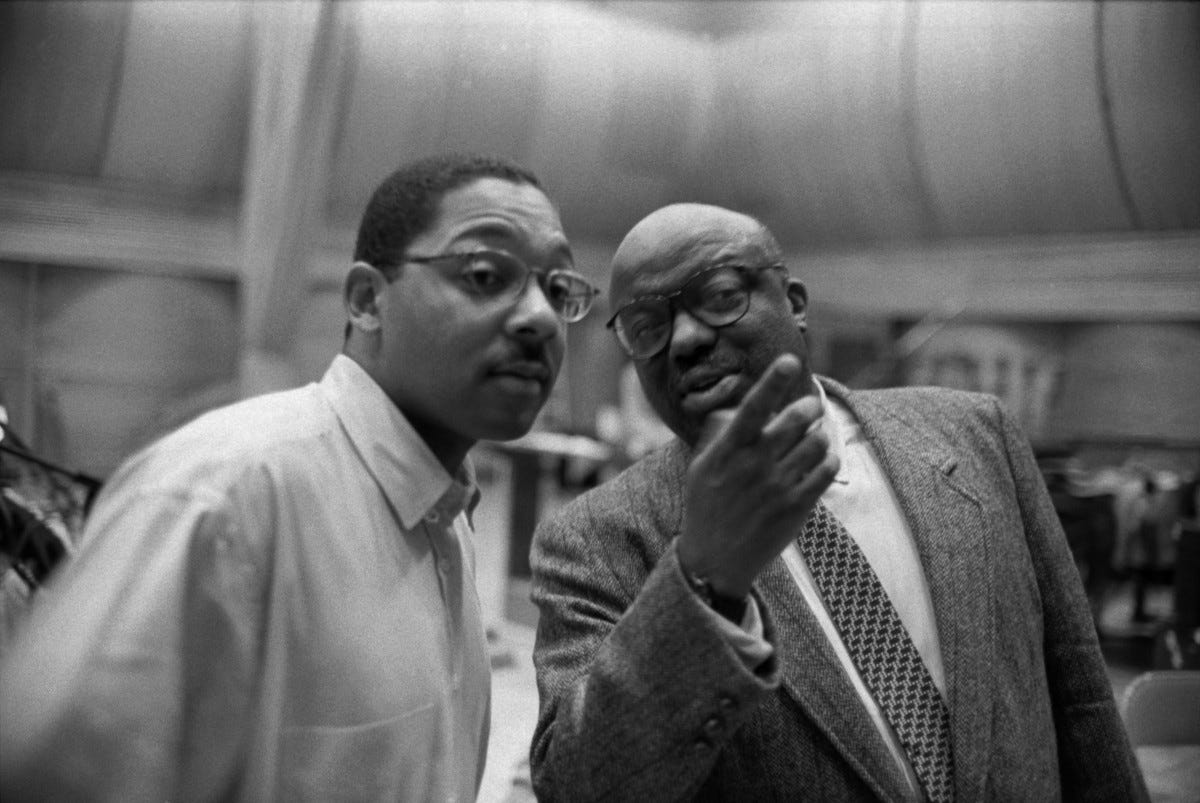
By naming the album Black Codes (From the Underground), Wynton Marsalis aimed a pointed critique at the elders of his generation, most notably Miles Davis, who, as Branford observed, had pursued the more lucrative paths of pop music. The comparison of commercialism to “volunteer slavery” became a throughline in Wynton’s career, one that has continued to evolve over time. More recently, it has surfaced in albums such as From the Plantation to the Penitentiary and The Ever Funky Lowdown, where Marsalis directs his criticism squarely at the commercial appeal of hip-hop and what he sees as its damaging consequences for Black Americans.
This criticism of jazz musicians as “no more than barometers of trends” was a major theme in Wynton Marsalis’ commentary during the early to mid-1980s. For his outspokenness and sharp critiques of his elders, he drew the ire of much of the jazz world. Many felt he had not yet earned the right to criticize, given that he was still in his early twenties. That perception was only heightened by the significant money and attention record labels invested in him, eager to market a charismatic young figure. His dual mastery of jazz and classical music was itself a rarity—and in 1984 he became the first musician ever to win Grammy Awards in both categories in the same year. This unprecedented achievement, combined with the industry’s backing, gave him a platform that even many older masters never enjoyed. As Branford notes:
“Wynton came out guns blazing rhetorically. And the moment you come out in a fairly unapologetic, unconciliatory fashion, playing a minority music, the majority will find ways to get back at you.”
Branford contends that Wynton broke an unspoken code in jazz that young musicians didn’t speak out of turn. It wasn’t about being right or wrong, but about respect and paying your dues. Branford recalled a moment from his own youth, when he spoke out during a rehearsal and offered unsolicited advice:
“Being the age I was, I should have kept my mouth shut, because 21-year-old kids don’t need to be out here intimidating their elders in a certain kind of way.”
The way society “got back” at Wynton—clearly stated in Baby Miles and Baby Wayne—was by putting him in a box, labeling him, and using his brother’s contrasting style as a battering ram against him. Over the years, Wynton would be tagged with labels like “neoclassicist” or “conservative.” The derisive tone of these terms reveals much about the values of the era. Yet, Branford contends that there is nothing inherently wrong with being a “neoclassicist.” What ultimately matters is the quality of the music.
Reframing Wynton Marsalis
Rather than seeing Wynton Marsalis as a conservative traditionalist trying to restore some mythical golden age of jazz, I believe it is more accurate to view him as a young, gifted musician who stepped out of line and used his platform to speak his mind—criticizing both his elders and the very institution jazz had become.
An apt comparison to Wynton in the figure of Pierre Boulez, who was equally divisive when he arrived on the scene in his early twenties, armed with strong opinions about the direction of classical music. Though not ideologically aligned, the parallels lie in their emergence, reception, and the effect this had on their subsequent work. Boulez began as a young radical, openly challenging his elders and their institutions, but eventually became an institutional figure himself—one whom the next generation would, in turn, criticize. His legacy, like Wynton’s, is often framed more by the controversies of his early career than by his musical and ideological development as a composer.
In a just society, Wynton’s age, and the arrogance of youth, would have been taken into account, and the controversy might have passed as nothing more than a passionate young musician overstepping in how he carried himself before his elders.
This brings us back to the question of context. As Branford emphasized throughout our conversation, context is often missing when people try to understand the particularities of a given time.
“Had there been any context to that discussion, they would have just said what other people said: ‘Y’all got some growing to do. It’ll be all right in the long run.”
Critical Discussions around the Definition of Jazz
At the heart of Wynton’s criticisms of jazz in his era, was the definition of jazz itself. Many of the major figures of jazz had gone on to play in other more lucrative genres. Jazz fusion was being pushed as a new modern version of jazz. And those playing jazz increasingly rejected the past in favor of novelty and innovation. Wynton came into this environment with a philosophy of studying the very music that many of these musicians who were still alive had invented and had long abandoned.
It is easy to take for granted what we understand jazz to be today. This clear understanding of jazz history we have at our disposal thanks to our distance, wasn’t afforded to young people of the late 70s and early 80s who were learning as they went. Institutions to study were scarce and the notion of going to school to study jazz was not as prevalent.
The definition of jazz has always been a moving target that would change depending on the point in time. By the 1980s, jazz’s moving definition had grown to a point where the history that created the music was increasingly becoming less relevant to what jazz was becoming.
When the cultural heritage of a music is being lost, is there a responsibility of the practitioners of the music to help preserve that music? While it is not the personal responsibility of any single musician to “save” the cultural heritage of jazz, it is historically significant that Wynton Marsalis chose to shoulder part of that responsibility.
He wouldn’t be the first Marsalis to take on the mission of preserving a cultural heritage. His father, Ellis, was a central figure in building institutions to safeguard New Orleans’ musical legacy. In that sense, you could say Wynton came by it honestly.
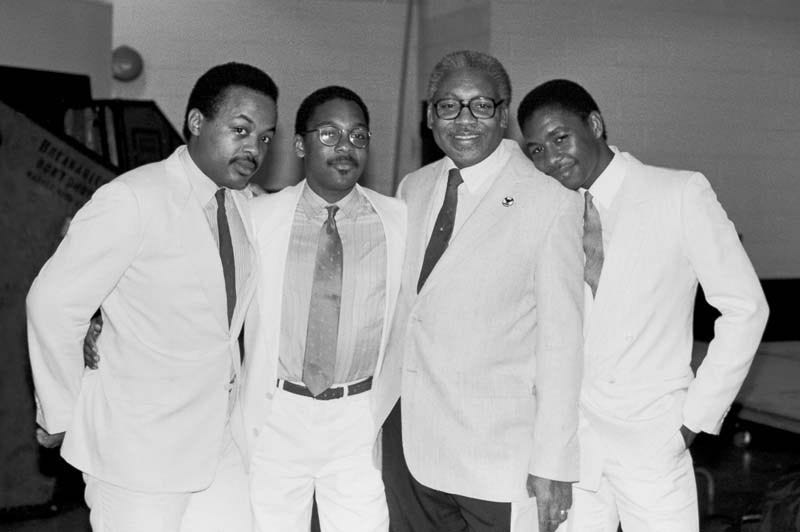
What often underlies the labeling of Wynton as a traditionalist is the modernist attitude that dominated both classical music and the jazz avant-garde: the conviction that breaking with the past was essential to creating a new future. This mindset became institutionalized in the classical avant-garde through figures like Boulez and his contemporaries (to return to that analogy). Embedded in this outlook is an inherent faith in innovation as progress—an ethos that pervaded much of 20th-century thought.
As historian Reinhart Koselleck observes in his writings on modernism:
“In a modernist paradigm, history becomes an object divorced from the present. It is an object to be studied and examined…The more a particular time is experienced as a new temporality as “modern”, the more that demands made of the future increase. Modernity in this sense means a human desire to control—in as much as possible— the future.”
This distinction is crucial. What looked in the 1980s like a struggle between past and future was, in fact, a struggle between two competing visions of the future—both of which we now inhabit in part.
On one hand, we live in the future that Marsalis and others fought for: a world where jazz is recognized as an art form, supported by institutions, and embraced as an indispensable part of America’s cultural heritage.
On the other, we also live in a future where genre boundaries are porous, where countless jazz-adjacent styles and fusions fall under the broad banner of “jazz.” The old question—what is jazz?—still lingers, but today we have more perspective, more tools, and a clearer vantage point than was possible at the time of Black Codes.
Looking back, Black Codes (From the Underground) stands as more than just a landmark recording of the 1980. It crystallizes the tensions that defined the jazz world at the time: youth and tradition, innovation and preservation, controversy and conviction. Wynton Marsalis became both a lightning rod and a standard-bearer, embodying the debates around jazz’s identity while shouldering a responsibility few of his peers wanted. The questions he raised—about heritage, authenticity, and the meaning of jazz itself—still echo today.
NEXT WEEK IN PART II: I analyze the music itself, its influences, innovations, and how it establishes the core characteristics of Wynton’s compositional voice. Through conversations with Watts, Branford Marsalis, and Mondre Moffett, this section reveals the album as standing at a crossroads between the controlled freedom of Miles Davis’ Second Great Quintet and the spiritual intensity of John Coltrane’s quartet, a synthesis of formalism and ferocity that shaped Wynton’s emerging compositional identity.
Great part one. Looking forward to part two.